
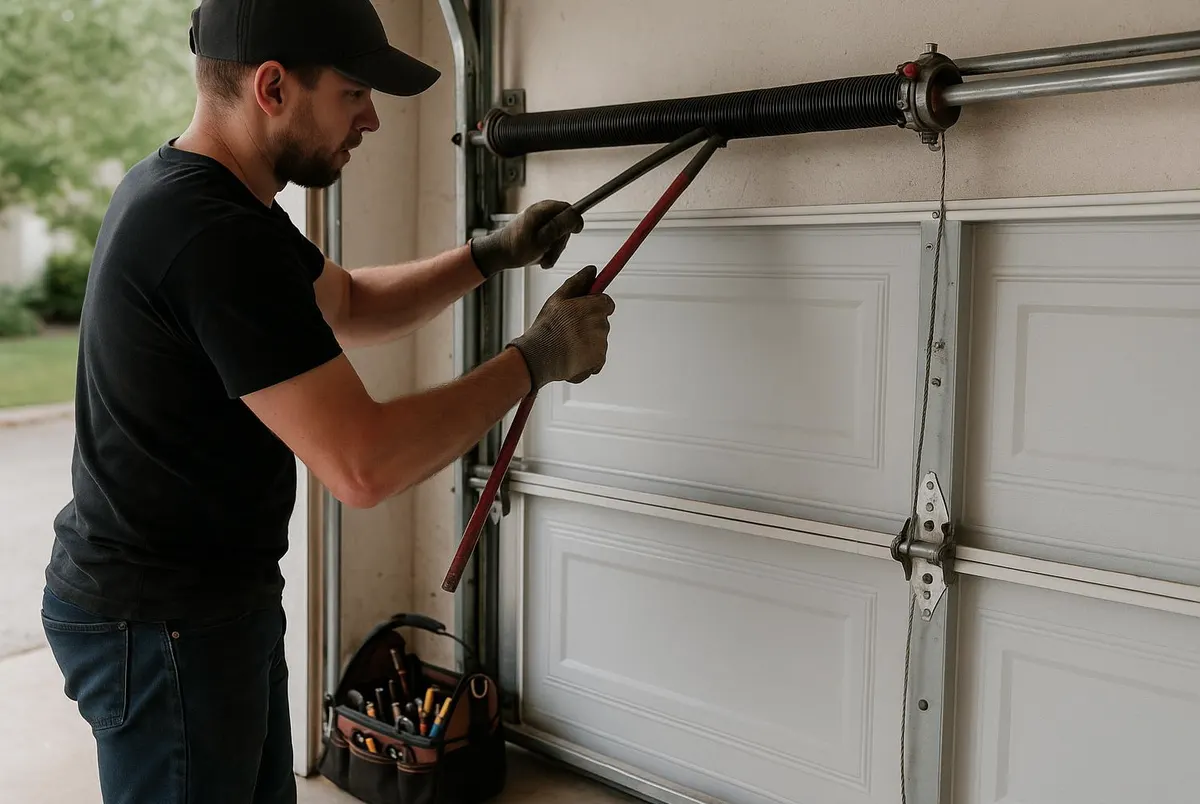
The Argument Starts in the Garage
It usually goes like this: you're backing the car out, or grabbing something off the shelf by the door, and you catch it out of the corner of your eye. A few silver threads sticking out from the cable near the bottom bracket, like a frayed shoelace. Or maybe it's the opposite — you hear a scraping, clicking sound as the door rolls up, and when you look closer, one of the rollers is wobbling in its track, worn down on one edge like an old tire.
One of you says, "We need to call someone about that today." The other says, "It's been doing that for months, it's fine." Here's the honest answer: it depends on which part you're looking at, and that difference matters more than most people realize.
What These Parts Actually Do
Your garage door doesn't lift itself — it's a balanced system. The springs (torsion or extension) do almost all the heavy lifting, using stored tension. The cables are the steel lines that connect that spring tension to the bottom corners of the door, keeping it level as it travels. The rollers are the small wheels, often nylon with a steel stem, that ride inside the vertical and horizontal tracks and let the door glide instead of scrape.
In other words: cables carry load. Rollers carry motion. That distinction is why one failing part is an emergency and the other usually isn't.
Frayed Cables: Treat Them Like a Warning Light, Not a Nuisance
A cable under tension is doing the same job as a cable holding an elevator — if it snaps, something heavy drops fast and unevenly. A frayed strand, a kink, or visible rust on the cable near the bottom bracket or around the drum at the top are all signs the cable is wearing out from the inside, not just the outside.
Symptoms worth taking seriously:
- Visible broken strands, even just a few
- The door looks slightly crooked or one side sits lower than the other when closed
- A popping or snapping sound during operation
- Rust or pitting on the cable, especially after a humid summer
If a cable lets go while the door is in motion, the door can drop suddenly and unevenly, which stresses the opener, the track, and anything — or anyone — underneath. This is not a "get to it next weekend" repair. A frayed cable is on borrowed time, and there's no way to know from the outside how much time is left.
Worn Rollers: Annoying, Noisy, but Usually Not Urgent
Worn rollers are a different story. They cause noise, vibration, and jerky movement, but they're not holding the door's weight the way cables are. A cracked nylon roller or a roller with a wobbly stem will make the door sound rough and can eventually cause it to jump the track, but it typically gives you warning — weeks of noise and roughness — before it actually fails outright.
Signs your rollers are the issue:
- Grinding, clicking, or scraping that gets louder over time
- The door seems to hesitate or jerk at certain spots as it opens
- Visible wear, flat spots, or cracks on the roller wheels
- Rollers that look loose or crooked in the track
Worn rollers are worth fixing because they put extra strain on the opener and the track over time, and because a roller that finally does fail can cause the door to bind or come off-track. But you can usually schedule that repair instead of treating it as an emergency.
Why Local Weather Speeds Up Both Problems
Around Campobello and the surrounding Upstate, garages take more weather abuse than people expect. Heavy summer humidity and heavy rain push moisture into the garage, which accelerates rust on cables and cable anchors, especially on older systems that haven't been lubricated in a while. Pine debris and pollen work their way into tracks and rollers, mixing with old grease to create a gritty paste that wears roller wheels down faster than clean, dry conditions would. Then when an occasional ice storm hits, cold-stiffened cables and gummed-up rollers are more likely to bind, pop, or snap under the sudden strain of a cold start-up.
That combination — humidity now, cold snaps later in the season — is exactly why early fall is a smart time to actually look closely at these parts instead of just listening to the door and assuming it's fine.
What To Actually Do About It
If you spot a frayed cable, don't run the door again if you can avoid it. Use the manual release, prop the door safely if it's open, and leave it alone until it's inspected. Don't try to tape, trim, or re-route a fraying cable yourself — the tension involved makes this a job where a mistake can cause real injury.
If it's rollers, you can keep using the door, but don't ignore it. Note when the noise started, whether it's getting worse, and whether the door ever hesitates or jumps slightly in the track. That information helps a technician diagnose it faster.
When to Call Campobello Garage Door
If you're looking at a frayed cable, stop guessing and call. This is exactly what our Spring Replacement and Cable & Track Repair service is for — we inspect the whole system, not just the obvious symptom, because a failing cable is often paired with spring wear that caused the extra strain in the first place. If it's rollers and general wear, our Preventive Maintenance visit covers lubrication, roller inspection, and track alignment, which is the kind of service that catches these issues while they're still a minor fix instead of a Saturday emergency.
Either way, you don't have to be the one to decide who's right in the argument. If you're in Campobello, Landrum, Inman, Chesnee, Spartanburg, Boiling Springs, Wellford, or Tryon and something sounds or looks off, give Campobello Garage Door a call — we'll tell you straight whether it's urgent or not, and fix it either way.